

“It's a very direct evolution, honestly. In undergrad, I was painting the shadows of plants on bodies. And then in grad school, I was painting just the plants that were acting like bodies. And as they got more and more human, the work got more and more abstract.”
Alboreo moved to New York in 2018 after getting into the Trestle Projects artist residency in Sunset Park, Brooklyn. The program, like many other collective art spaces, did not survive the COVID-19 pandemic, but was the perfect introduction to the city for the painter. Many of Alboreo’s close friends came from her time there, as well as the next couple of residencies and shared studio spaces she would operate out of over the next few years.
“It was perfect. It was just what I needed.”
With the transition away from easy opportunities to engulf herself in trees and mountains to living in a concrete jungle, Alboreo’s painting rhythms continued to evolve. At first, the drastic change in the number of natural spaces left her confused and unsure of how to artistically proceed. She loved plants, but wasn’t around them as much anymore. She worked for a while as a pedicab tour biker in Central Park, and would draw the trees around her on her lunch break, but it didn’t compare to sitting down on a hike and drawing what she saw.
and more human,
and more abstract.”
“I didn’t know quite how to deal with it, because I really liked painting plants, but it almost felt ingenuine to my personal experience, because I wasn’t seeing them the way I used to.”
At a point, however, Alboreo accepted the elements of her new environment, and began leaning into all the human limbs she now saw crawling through New York City. Inspired by the growing number of arms and legs in her work, she began artistically diving into another lifelong love of hers: wrestling.
“Wrestling is something that I just liked as a kid and never stopped watching. I like WWE -- It’s just so performative and silly. It’s these tough, macho guys with their butts in each other’s faces. The men are just as sexualized as the women. It’s like, accidentally woke. There’s such a homoeroticness to it, to the point where no one sees it but everyone is bought in.”
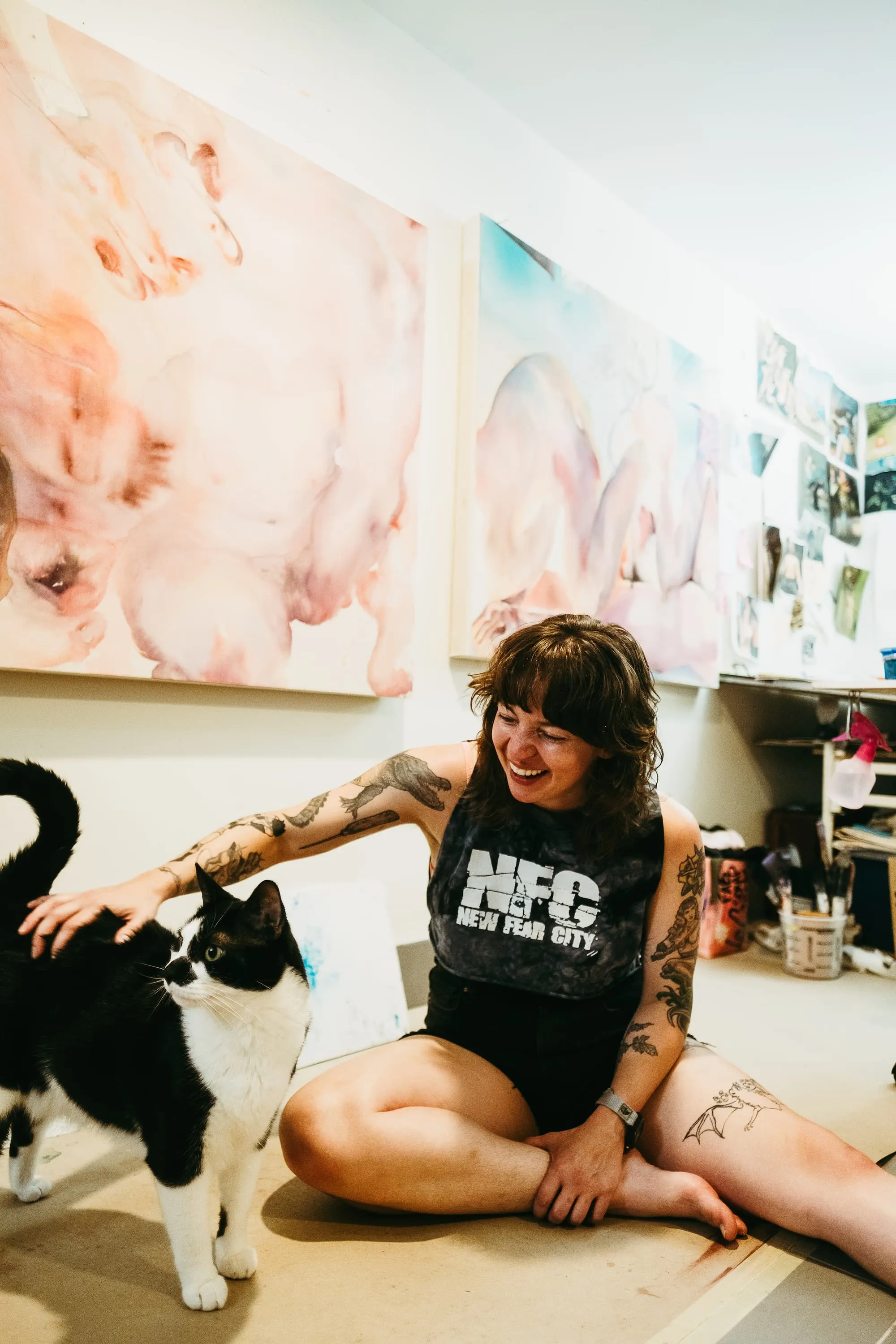
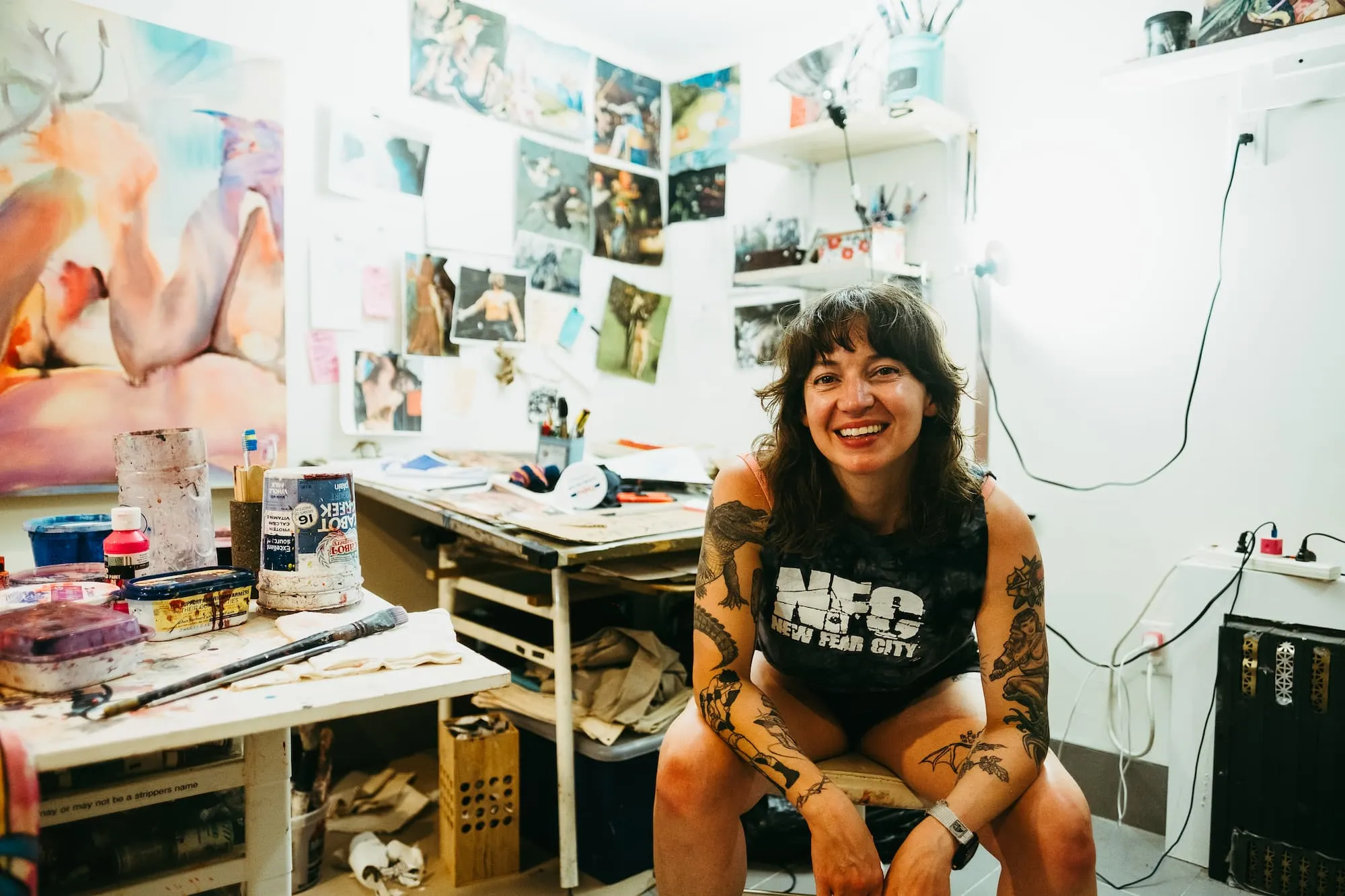
Over the past handful of years Alboreo has moved through collectives, residencies and studios, finally landing in her own personal space in her home’s basement, where she’s now been for four years. Her work continues to reflect what she loves the most about her environment. Now at multiple wrestling nights in Brooklyn, she brings home images she captures of tangled, bloody, sweaty limbs to paint, just like she used to do with tree limbs and flower stems. In her basement studio, she’ll slowly build a garden on canvas of wrestling figures, vibrant colors and abstracted bodies.
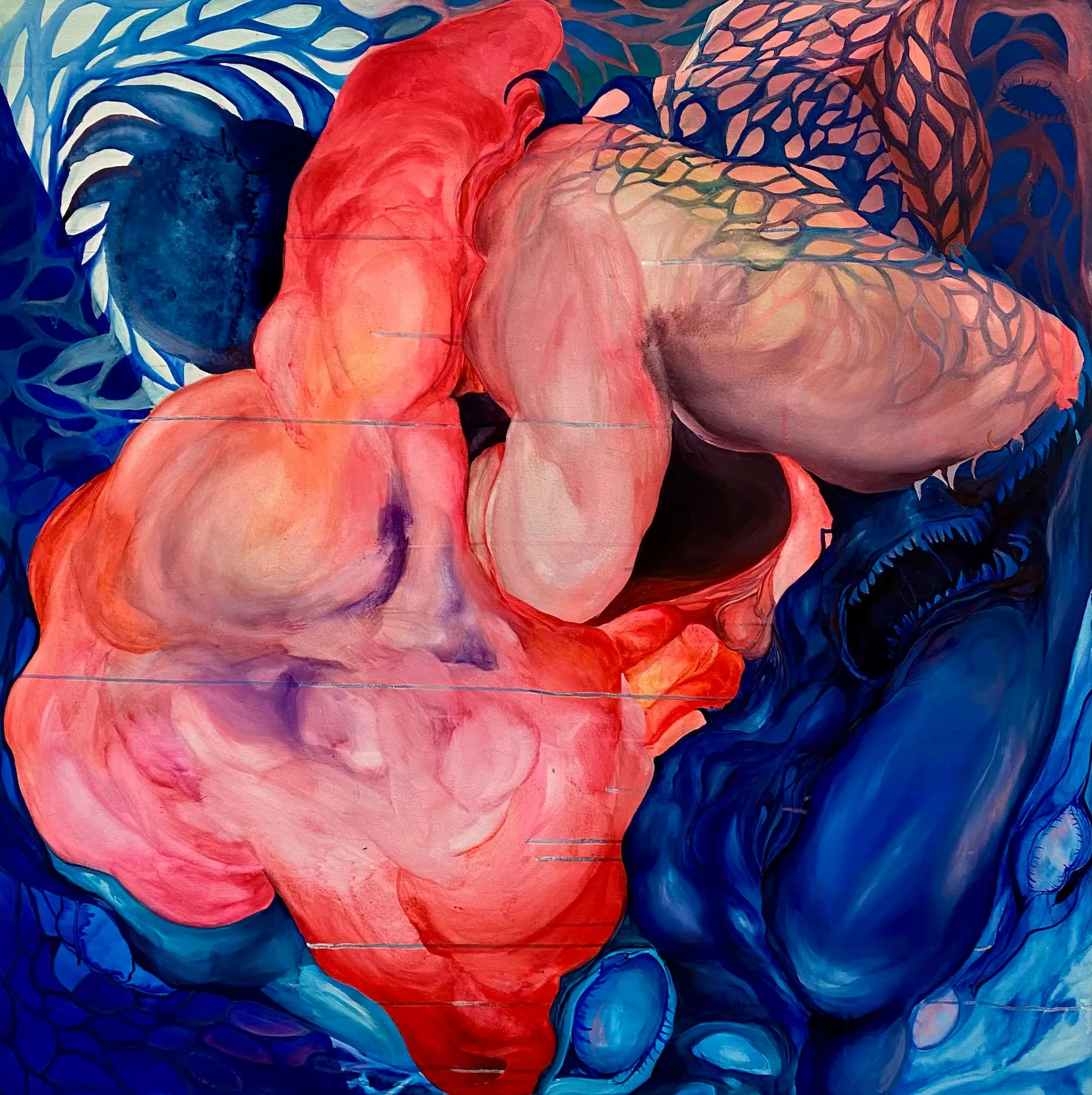
acrylic and paint marker on canvas, 2021
“Plants wrestle and people wrestle, it’s all the same. I like thinking about survival and evolution, and how everything in life can feel like wrestling.”
Alboreo is a long way from the nature walks her and her dog used to take, but every step of her artist evolution reflects a learning to love wherever the painter has found herself. As she handles the waves of life, she grows in confidence to not only handle abstract art and its extreme lack of rules but to enjoy the process of changing as a person and artist, as well.
“As a viewer, when things are more abstracted, you can bring more of your own ideas and imagery into it. If it's a picture of a person, that's what it is, right? But when it becomes multiple things, or when you add the vagueness of abstraction, then whoever's looking at it can bring their personal experiences, ideas, thoughts and feelings into the work.”
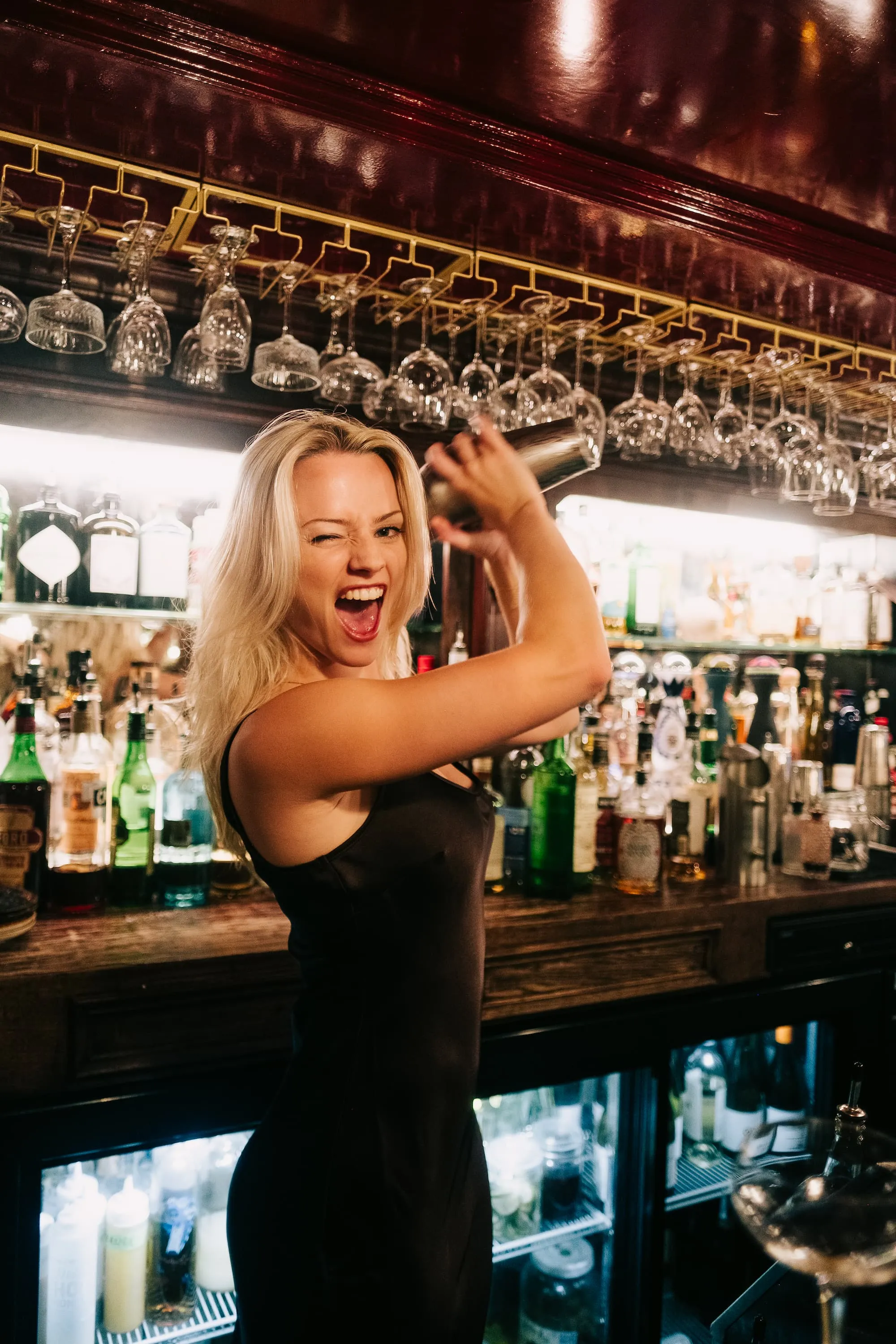
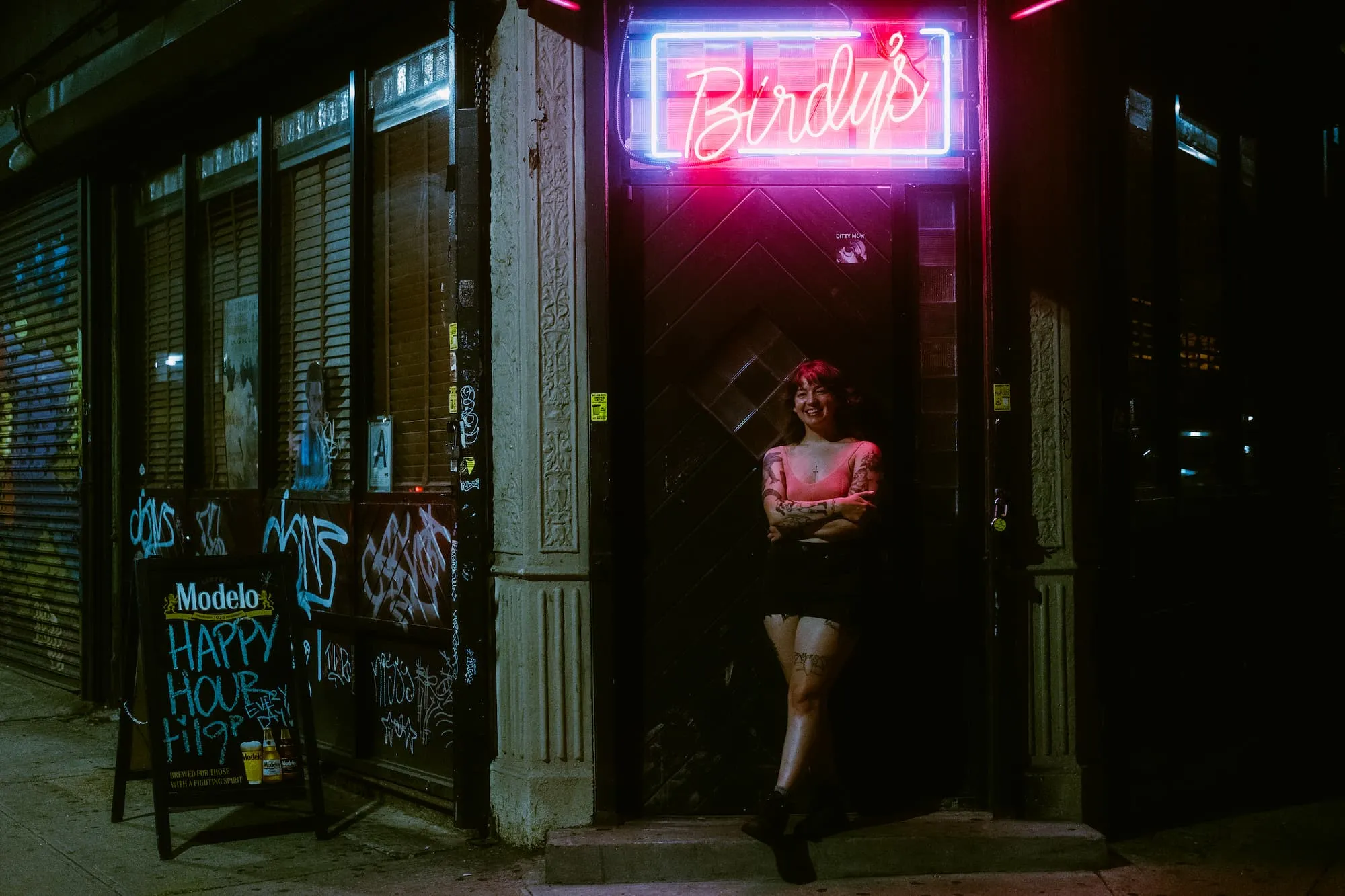
Alboreo bartends at both Birdy’s and Coyote Club in Bushwick. Every apartment the painter has had in New York has been in walking distance of Birdy’s, and so while she now makes drinks there, she’s loved the bar and its clientele for years. As a bartender, she’s further developed an admiration for people and a comfortability with talking to strangers. This practice has only strengthened her desire to show humans in her work and consider feelings of others while she paints elbows and knees across vibrant, colorful landscapes. She wants her paintings to live with people, to elicit feelings of both warmth and strength, and most importantly, to show the fluidity and abstractness of wrestling with human existence.
“That's what you want about art: to connect with people. Whatever your art is, what you want is to make somebody feel something, totally. That’s what I want, at least, because I feel so strongly about what I do.” ∎