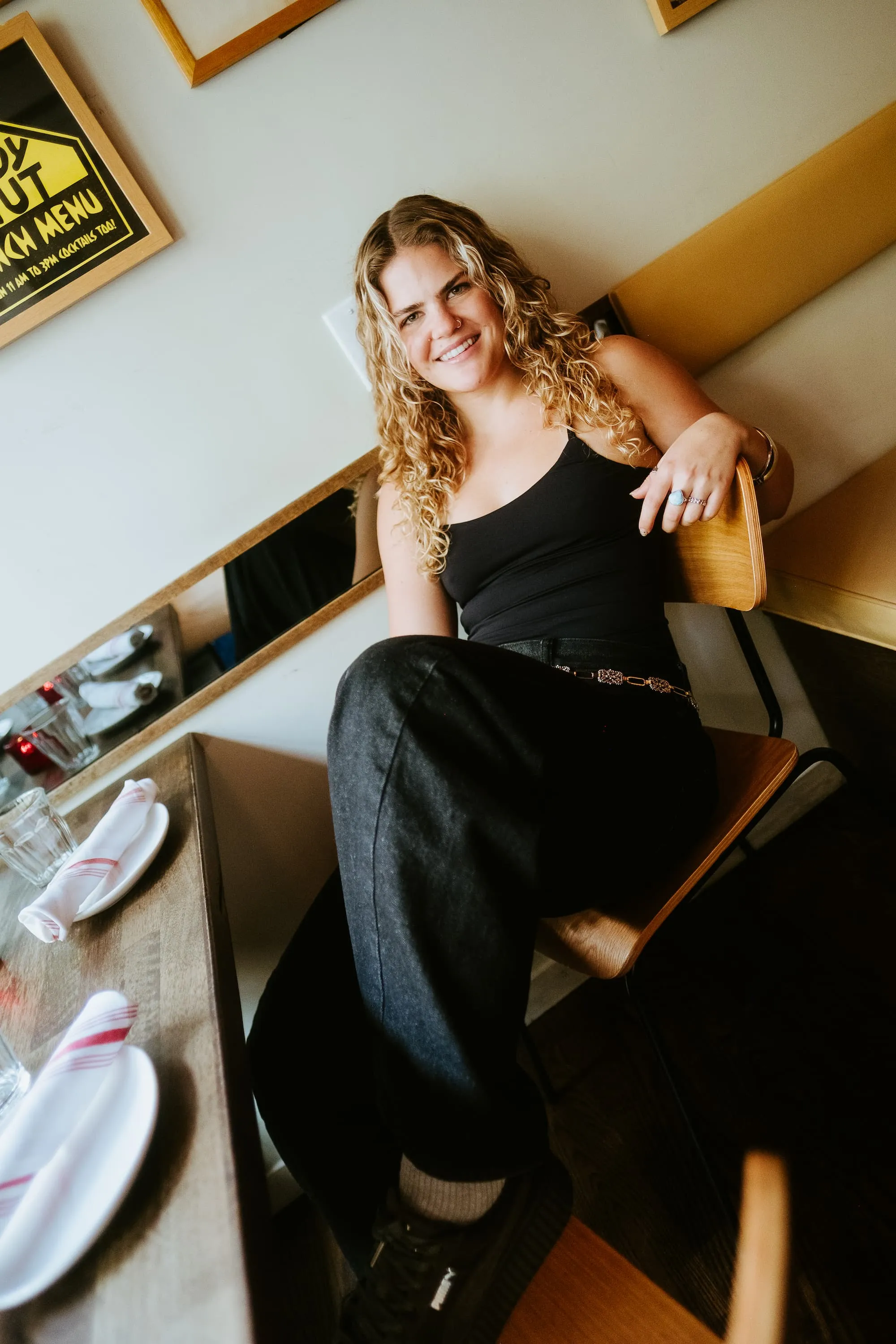


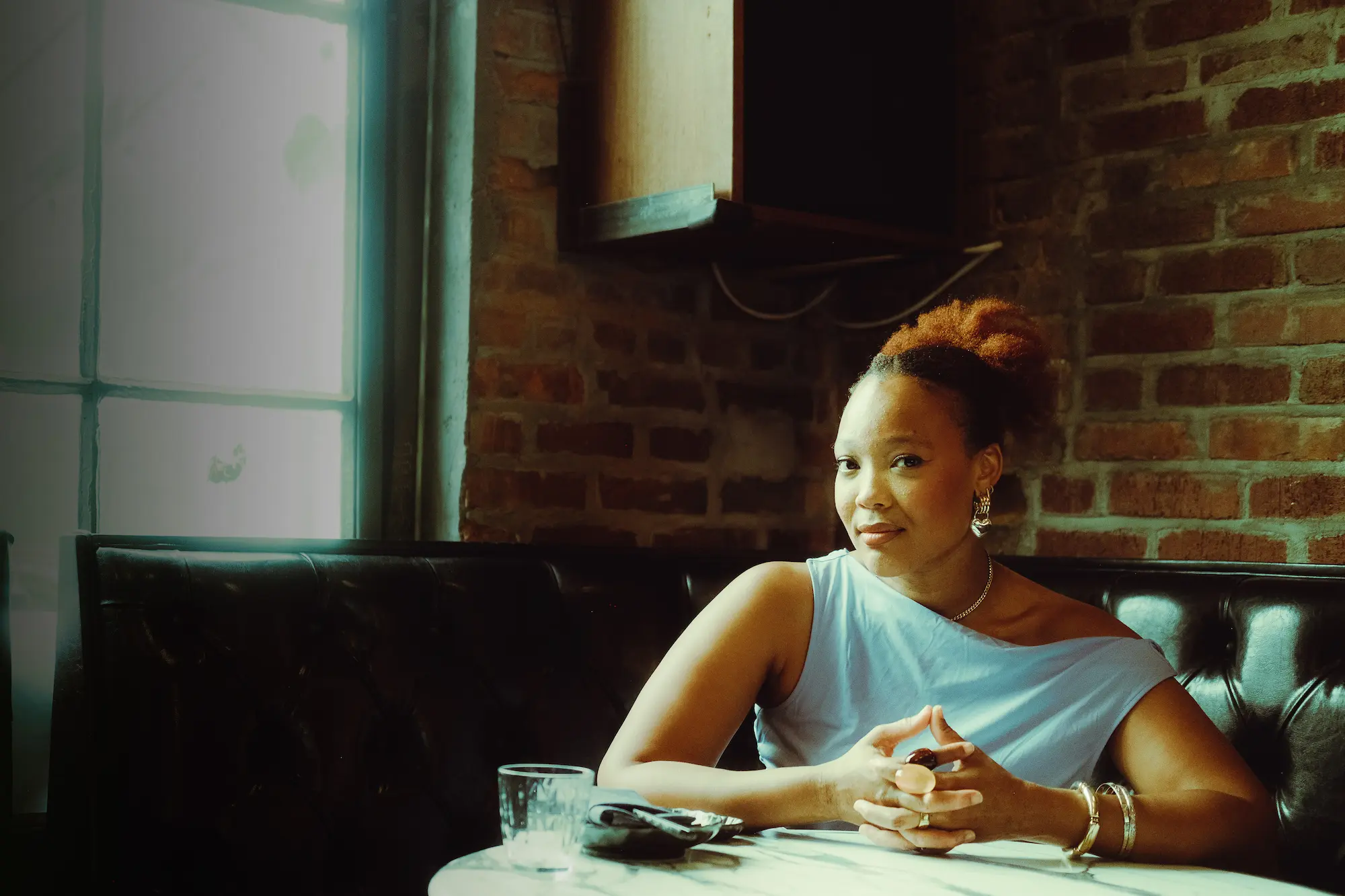

Pursuing music, for Gaza, would mean embracing confident, honest self-expression. Since she saw neither elements celebrated in her upbringing, she felt pulled towards a more conventional approach to life.
“I didn't think I would want to – I mean – I didn't think I would ever sing professionally, because of my family. I just never thought about it like that.”
In the face of these influences, however, Gaza felt an internal pull in a different direction. From having friends in conservatories, starting a guitar-playing group in high school with other girls, and throwing her school’s first prom, Gaza brought a determined spirit to staying within music’s arena. During her teenage years, she began to pay more attention to her surroundings when she’d visit her mother’s family in North Carolina. Seeing the American cultural norm of outward self-expression brought a positive connotation of music to life, allowing her to foresee a musician’s lifestyle in a way that didn’t feel shameful.
“America was always this really cool country where black people are successful. People would dance in the streets and sing out loud, too. We didn’t have that in France.”
When she left France to attend university in North Carolina, Gaza decided to major in political science, a route encouraged by her father and seen as a formal, respected path to follow. She used debate club, Model UN, and other career-adjacent speaking opportunities to combat her sense of shyness. As her confidence grew, so did the rift between the expectations rooted in her more modest French upbringing and the authentic version of herself she was starting to envision. She began seeking out ways to feel closer to herself. For Gaza, that meant spending more time with music. She signed up for ROTC so that she could leave the house in her uniform to then change and go to parties with friends or take bus trips to New York City. She enrolled in jazz classes without her parents knowing and attended the open mics of a teacher who saw potential in her. Gaza was determined to continue loving music and life in the best ways she knew how. Bill Hanna, Gaza's former jazz professor, would push her to sing in front of people. He was one of the first adults to believe in her ability as a musician.
“I would always change my key to a lower one because I thought everything was too high for me, and he would say, ‘No, you got this.’ I was like, ‘No, but okay, I'm going to trust you.’ At his gigs and open mics he always put me on stage. He was so cool.”
something you learn.
It felt like restraint,
become too shy
for public speaking
or singing in
front of anyone.”
Once she graduated school, Gaza moved to New York to work at Amnesty International before landing an internship at the United Nations, still following her family’s wishes. To supplement the unpaid position, she got her first restaurant job at Mominette Bistro in Bushwick. As the hostess, she grew accustomed to speaking with strangers and putting herself through the performance that comes with working in the front-of-house of a restaurant. She grew close with Mirella Costa, a Brazilian singer, amongst others, and would go see them at shows, teach them French in her spare time, bring them to Mominette to eat, and get to know the city through the eyes of women following their dreams. She never performed anywhere herself, though, always prioritizing her work at the UN. She consistently watched as her ambitious friends actively pursued their love of music, but tied herself to a seat in the audience.
“I was a fan of my own friend. I never told her that I sang, though, because I felt like she was so good at it.”
Regardless of how alluring her friends’ gig lifestyles appeared, Gaza's familial and cultural influences continued to dominate her decision-making. Finishing her year in New York, she left for France on a break in the spring of 2020 with a guaranteed full time position at the UN upon return. The COVID-19 pandemic spread to Europe just as she arrived back home, and what was meant to be a few-month hiatus turned into three years of living in France. Through reconnecting with old friends, Gaza was recommended to audition for a professional gospel choir in the area. After trying out and earning a spot, she took a first step in turning her lifelong love of singing into more of a reality. She spent COVID’s hardest years singing on Zoom with her choir, experiencing her first breaths of fresh air with them when restrictions finally loosened.
“I had my first outings with that choir, because in France you needed authorization to go out at the time. My choir lead would recruit 20 of us to perform on The French Voice, and I would go and think, ‘Thank God, I can go out and sing.’”
Singing with the choir on television and in front of remote audiences brought her face to face with a self-assured identity she’d only seen in glimpses before. The competitiveness of asking for solos, keeping up with professionals, and holding her own challenged her slowly developing confidence, but felt surprisingly natural. She embraced every opportunity to further chase her growing persona.
“Confidence directly affects your ability to sing and be a good storyteller. The gospel gave me an incentive to do more. I started doing background singing for other artists, and I got an opportunity to sing in this nice resort for an hour. I brought my dad to watch me. He seemed so proud of me. He kept saying, ‘That’s my daughter.’ And I was like, ‘Oh, finally, we have good feedback.’”
During the three years she spent back home, Gaza kept in touch with a musician she’d met at The Blue Note in New York. During lockdown, he invited her to travel with his jazz ensemble on tour in France. Hopping between jazz festivals and venues all over the country, Gaza saw a side of France she hadn’t experienced: one that celebrated playing music, dancing, and singing for others. While on the road, the two fell in love, and when the opportunity arose for her to return to New York, she moved in with him into his family’s home in Bushwick. She was finally back in the city, ready to give being a musician a real shot.
“I thought to myself, ‘I don’t think I will be complete if I don't make my own music and see what it could do.’”

Gaza has now been back in New York for nearly two years, and is in the middle of rewriting her relationship with singing. She treats her love of music as a defining element of her life instead of an urge to suppress. Working as a maître d’ at both Sea Wolf and Trad Room, a Japanese fusion restaurant in Bed-Stuy, allows her the flexibility to meet people and improve herself as a musician. At Sea Wolf, every Thursday at 7 p.m., she has three hours to try out new music, continue to grow in confidence, and finally enjoy singing on her own for others.
“It's a residency for my own projects. I’m still fighting my shyness, but I'm more confident every Thursday because I did it last Thursday. You have to practice. It’s all about practice.”
When she’s not singing at Sea Wolf or seating guests, Gaza develops her skills by taking guitar and vocal lessons, visiting jazz clubs with her friends and partner, and most of all, creating her own sound. Over the past year, she’s released two original songs in collaboration with her partner and connections she’s made since being back in New York. Releasing her own music is an accomplishment Gaza never would have entertained back in her early days of living in the city. Now, she sings them to her crowd every Thursday. In April of 2026, she plans to release her first EP of original music. The collection will reflect her love of the different styles she grew up around both in France and America, with jazz, R&B, Congolese, soul, and afrobeat undertones. The tracks showcase her excitement of living in this new music-obsessed New York world she’s created for herself.
“I have always been obsessed with love, so you’ll have to be ready to hear about that. And I love a groovy beat, I want you to bounce left to right. I really just want to show the diversity of what I have been exposed to musically.”
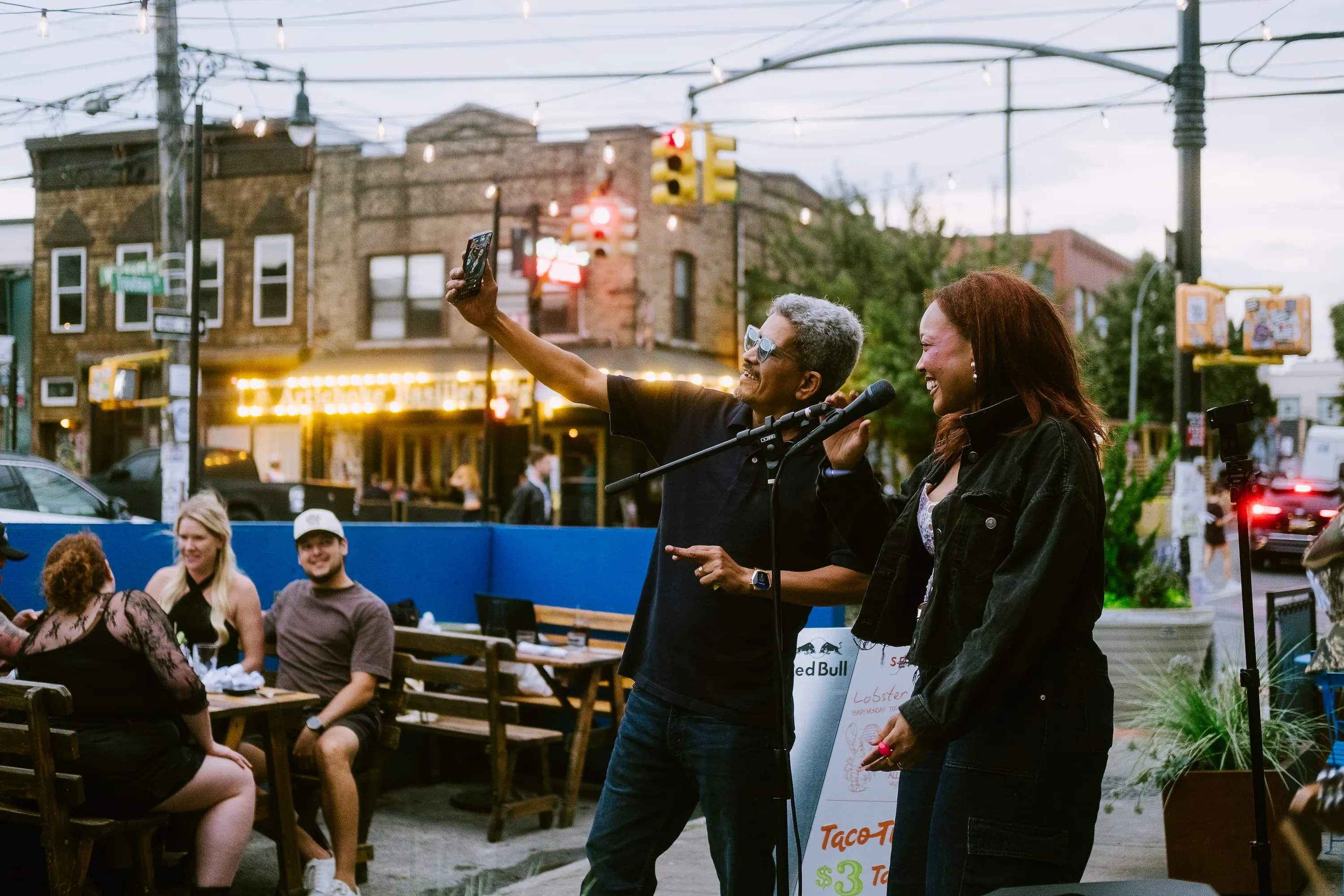
Working with her partner to create the EP and performing for the first time consistently has deepened Gaza's perspective on what loving music can look like. Everything about the process of building her own sound and sharing it with the world is new to her, and she treats every day with ambition and eagerness. Starting an endeavor closely aligned with what Gaza always envisioned for herself in the back of her mind scares and excites the singer. Now that she is giving music a true chance, though, she sees that the path she currently finds herself on is the one she was always meant to follow.
“There was just always music. It wasn’t always the most predominant thing but there was always music. Even when I tried to do other things, it just kept on coming back to me.”
Over the course of her life, Gaza has struggled to blatantly state where she’s from or what elements of her stand out the strongest. Regardless of whether someone sees her as French, American, Congolese, or a melding of the three, she understands the beauty in the complicated answer. What’s never wavered for her in terms of her identity, however, is the closeness she feels to herself when she sings. Whether playing at her French high school’s first-ever prom with her friends, singing with her professor at an open mic in North Carolina, performing for screened audiences all over the world with her gospel choir, or simply playing guitar for her family members, music has always found a way into her life. After years of cheering on the developing careers of close friends and looking at the life of a musician from the outside, she’s finally chasing a career that has been waiting backstage for her entire life. ∎